Cart
0
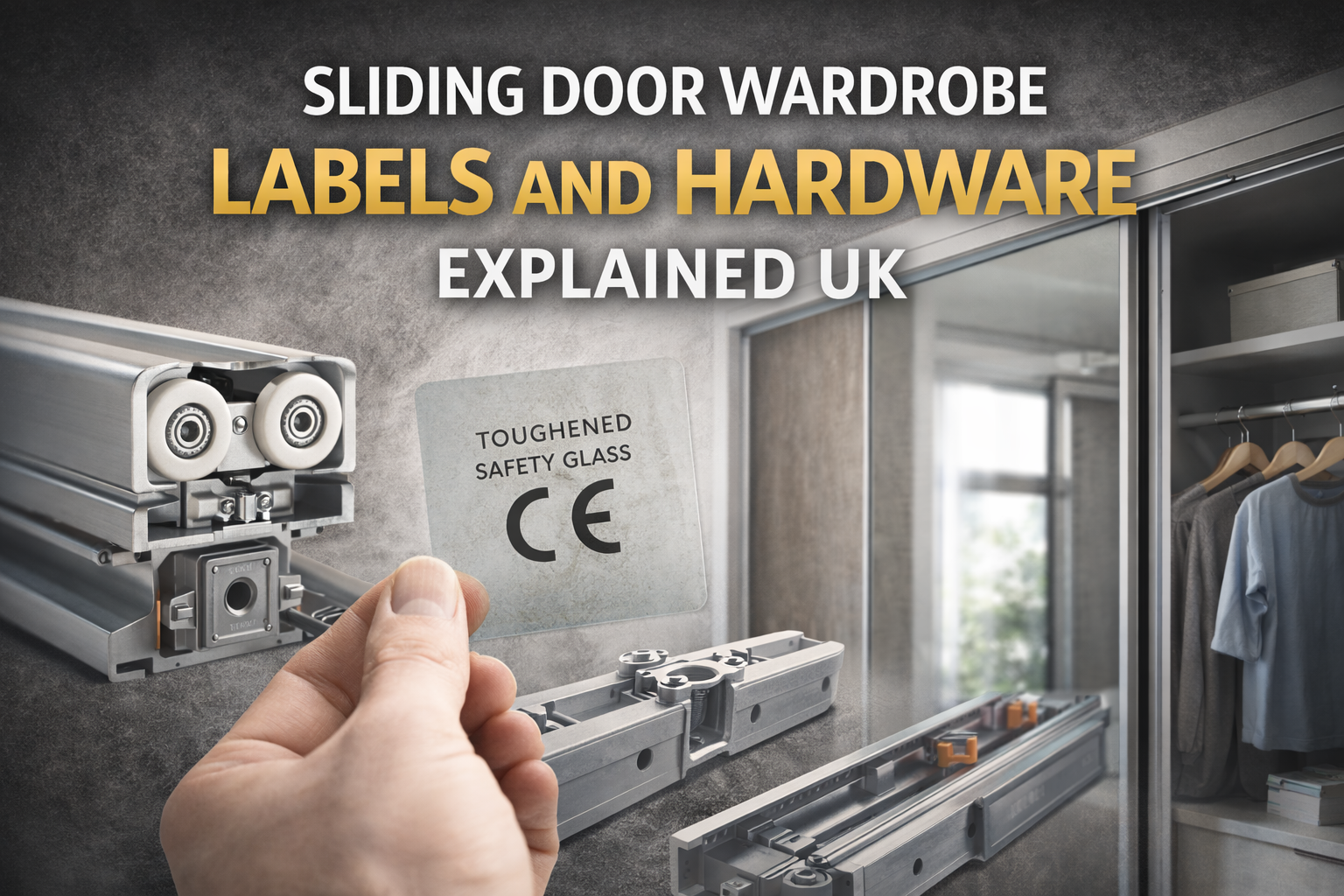
When buying a sliding door wardrobe, most people focus on size, colour, and door style. But the real performance of a wardrobe depends on something many buyers overlook. The labels and hardware used inside and behind the doors.
Understanding wardrobe hardware and common labels helps you choose a wardrobe that lasts longer, slides smoothly, and feels solid every day. This guide explains sliding door wardrobe product labels and hardware in simple terms, with a clear UK focus.
Why wardrobe hardware matters more than you think
A sliding wardrobe may look stylish on the outside, but poor hardware can quickly ruin the experience. Noisy doors, stiff movement, misalignment, or early wear are all signs of low-quality components.
Good hardware ensures:
Smooth sliding doors
Long-term durability
Safe everyday use
Quiet operation
Better value for money
Knowing what to look for helps you avoid future problems and unnecessary repairs.
What does “wardrobe hardware” include
Wardrobe hardware refers to all the moving and structural parts that make a sliding wardrobe function properly. These include:
Sliding tracks
Rollers and wheels
Door frames
Soft-close mechanisms
Handles and profiles
Internal fittings like hinges and drawer runners
Each component plays a role in how the wardrobe feels and performs.
Sliding door tracks explained
Tracks guide the doors and support their weight. In UK sliding wardrobes, you will usually find two main types.
Top-hung tracks
These systems carry most of the door weight from the top. They allow smoother movement and reduce pressure on the floor. They are common in premium wardrobes.
Bottom-rolling tracks
Here, the door weight sits on rollers at the bottom. These are more common and cost-effective. Quality versions still perform very well when installed correctly.
Look for tracks made from aluminium or reinforced steel. Plastic tracks wear out quickly and should be avoided.
Rollers and wheels
Rollers are one of the most important parts of a sliding wardrobe. They allow the doors to glide smoothly.
In the UK market, good wardrobes usually feature:
Steel or nylon rollers
Ball-bearing systems
Adjustable height rollers
Ball-bearing rollers provide quieter and smoother movement. Adjustable rollers allow installers to fine-tune door alignment, which is essential in homes with uneven floors.
Poor rollers lead to dragging doors, noise, and early failure.
Soft-close mechanisms
Soft-close is a feature many UK buyers now expect. It slows the door just before it closes, preventing slamming.
Benefits of soft-close hardware:
Protects doors from damage
Reduces noise
Improves safety for children
Adds a premium feel
Not all soft-close systems are equal. Quality versions are tested for thousands of open and close cycles. Cheap versions may fail after a short time.
Door frames and profiles
Sliding wardrobe doors usually sit within aluminium frames or profiles. These frames provide structure and protect door panels.
Common finishes include:
Silver aluminium
Matt black
White
Champagne tones
Frames should feel solid, not flimsy. Thin or poorly finished frames can bend over time, especially on large mirrored doors sliding door wardrobe.
Understanding wardrobe labels in the UK
Wardrobe labels help buyers understand quality, safety, and compliance. While wardrobes do not carry the same labelling rules as appliances, there are still important markings and terms to know.
Safety glass labels
Mirrored and glass wardrobe doors in the UK should use safety glass. This is often labelled as:
Toughened safety glass
Tempered glass
BS EN safety standard compliant
These labels mean the glass is designed to break safely into small pieces rather than sharp shards. This is essential for bedrooms and family homes.
Material and finish labels
You may see labels describing door materials and finishes, such as:
High-gloss acrylic
Lacquered finish
Foil-wrapped MDF
Engineered wood
These labels indicate how the surface is made. High-quality finishes resist scratches, fading, and moisture better than basic laminates.
Always ask whether finishes are UV-resistant, especially for bright bedrooms.
Hardware quality labels and terms
Manufacturers often use specific terms to describe hardware quality. Understanding them helps you compare products.
Soft-close tested cycles
This indicates how many times the mechanism has been tested. Higher numbers mean better durability.
Heavy-duty track system
Usually refers to thicker aluminium tracks and stronger rollers.
European hardware components
Often used to signal higher-quality parts, though it’s still important to verify specifications.
Internal hardware you should not ignore
Sliding doors are only part of the wardrobe. Internal hardware also matters.
Drawer runners
Look for soft-close drawer runners made from metal, not plastic. They should glide smoothly even when fully loaded.
Hanging rails
Rails should be metal and securely fixed. Weak rails bend over time, especially with coats and heavy clothing.
Shelf supports
Adjustable shelf supports allow flexibility and should lock firmly into place.
Why UK homes need reliable hardware
UK homes often have uneven floors, older walls, and varying ceiling heights. This puts extra stress on wardrobe hardware.
Good-quality sliding systems allow for adjustment during installation. This ensures doors stay aligned even if the building settles over time.
Cheap hardware does not cope well with these conditions and often leads to misaligned doors or track damage.
How to spot poor-quality hardware before buying
There are some clear warning signs.
Doors feel heavy or stiff
Sliding action is noisy
Tracks look thin or unfinished
Rollers are not adjustable
No mention of safety glass or testing
If these signs appear, the wardrobe may not last long.
Maintenance and care for wardrobe hardware
Even high-quality hardware needs basic care.
Keep tracks clean from dust
Avoid slamming doors
Check roller alignment annually
Clean mirrors with suitable products
Proper care extends the life of both doors and hardware.
Final thoughts
Sliding door wardrobes are more than just panels and shelves. The labels and hardware behind the scenes determine how well the wardrobe performs every day.
By understanding tracks, rollers, safety glass labels, and internal fittings, you can make a smarter choice. Quality hardware means smoother doors, quieter operation, better safety, and long-term durability.
For UK homes, where layouts and building conditions vary, investing in well-designed sliding wardrobe hardware is essential. It ensures your wardrobe remains reliable, stylish, and enjoyable to use for years to come.