Cart
0
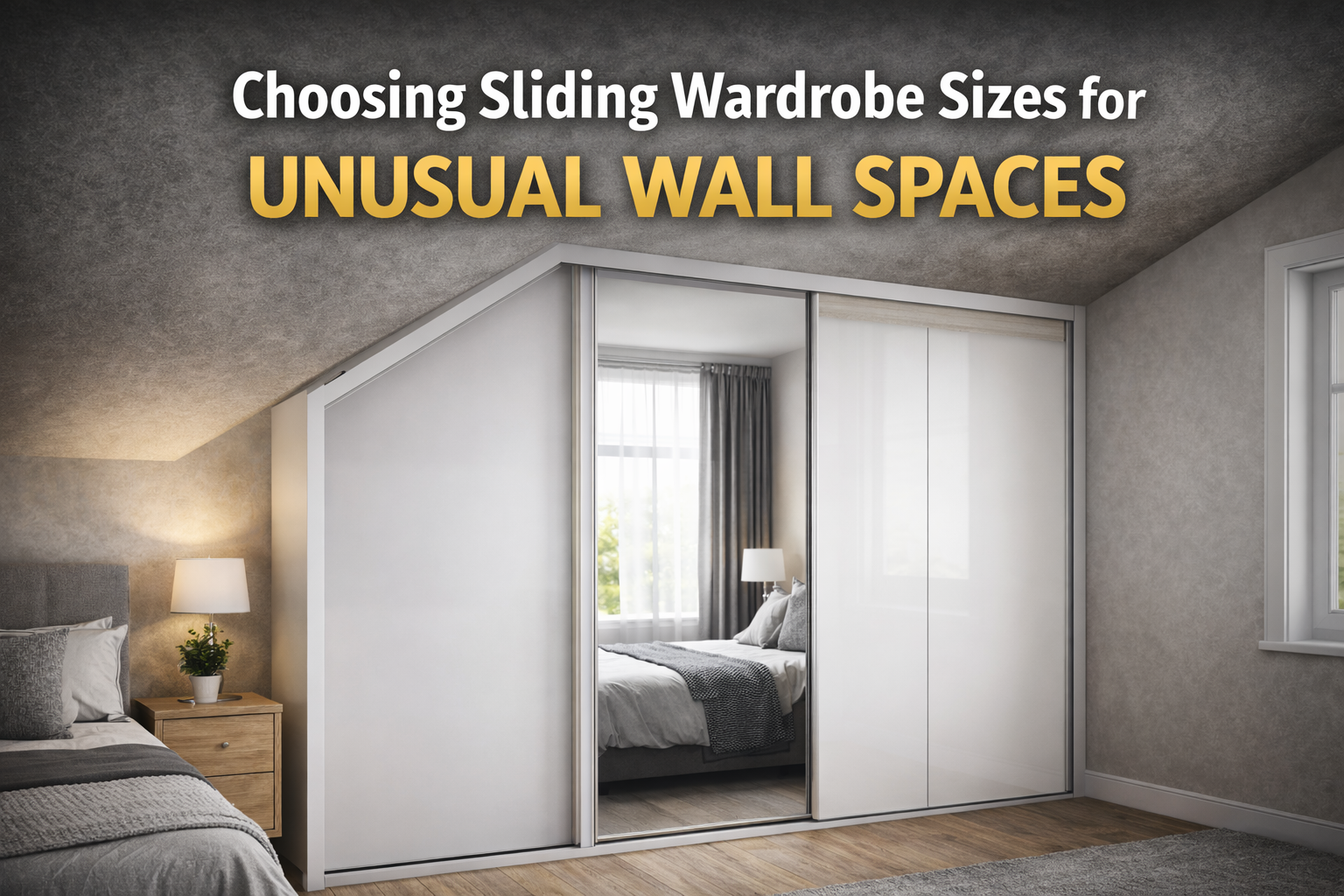
Not every bedroom has straight walls or perfect dimensions. Many UK homes come with sloped ceilings, alcoves, chimney breasts, boxed pipes, or narrow layouts. These unusual wall spaces often make choosing the right wardrobe difficult. Standard furniture rarely fits well, leaving wasted space or awkward gaps.
This is where sliding wardrobes become the ideal solution. With the right sizing and planning, even the most challenging wall space can be transformed into smart, stylish storage.
This guide explains how to choose sliding wardrobe sizes that work perfectly for unusual wall spaces.
What counts as an unusual wall space
An unusual wall space is any area where a standard wardrobe does not sit neatly. Common examples include:
Loft bedrooms with angled ceilings
Alcoves on either side of a chimney
Uneven or slightly bowed walls in older houses
Narrow bedrooms with limited walking space
Boxed-in pipes or columns
These spaces are often ignored or poorly used. A well-sized sliding wardrobe can turn them into one of the most functional parts of the room.
Why sliding wardrobes are best for awkward spaces
Traditional hinged wardrobes need space to open their doors. In tight or irregular rooms, this becomes a major problem.
Sliding door wardrobes do not need extra clearance. The doors slide sideways, making them ideal for narrow rooms, alcoves, and areas close to beds or walls.
They also allow you to build storage wall to wall and floor to ceiling, which is perfect for making the most of unusual spaces.
Measure everything carefully before choosing a size
Accurate measuring is the most important step. For unusual wall spaces, never assume walls are straight or even.
Measure the width at three points
At floor level
At waist height
At ceiling level
Measure the height at both ends and the centre, especially in older homes. Always work with the smallest measurement to avoid fitting issues.
Also note skirting boards, coving, plug sockets, and radiators. These details affect the final wardrobe size and fit.
Choosing the right wardrobe width
For alcoves and narrow walls, the best approach is usually a full-width wardrobe. This creates a built-in look and avoids wasted side gaps.
Sliding wardrobes can be sized to fill the entire space, even if the walls are uneven. This works especially well in older UK homes where symmetry is rare.
In wider rooms, consider dividing the wardrobe into two or three sliding panels. This makes access easier and keeps door sizes manageable.
Adjusting height for sloped or uneven ceilings
Sloped ceilings are common in loft conversions. Standard wardrobe heights rarely work here.
The safest option is to size the wardrobe to the lowest ceiling point. This ensures the sliding doors move smoothly and reduces installation issues.
Internally, shelves and hanging rails can be stepped or adjusted to follow the ceiling line. This allows you to keep useful storage without affecting the external door height.
Selecting the correct depth for tight layouts
Depth is often overlooked, but it matters a lot in small or awkward rooms.
Standard wardrobe depth is around 600mm. In narrow bedrooms, a slightly reduced depth can improve movement while still offering enough storage.
Sliding wardrobes are ideal here because there is no door swing. Even with reduced depth, hanging rails and shelves remain easy to access.
Using mirrors to improve difficult spaces
Unusual wall spaces can make rooms feel smaller or darker.
Mirrored sliding wardrobes help solve this problem. Mirrors reflect light and visually expand the room, making awkward layouts feel more open.
They are especially useful in loft rooms, narrow bedrooms, and spaces with limited natural light. As a bonus, you also remove the need for a separate mirror.
Planning the internal layout for awkward shapes
A well-sized wardrobe still needs a smart interior to work properly.
For unusual wall spaces, flexible internal layouts are key. Adjustable shelves, mixed hanging heights, and custom drawer positions help you use every inch.
Low areas under sloped ceilings are perfect for drawers or shelving. Full hanging sections should be placed where ceiling height allows. This balance keeps the wardrobe practical and easy to use.
Dealing with corners and boxed-in areas
Corners and boxed structures can interrupt clean lines. Instead of forcing a standard shape, plan the wardrobe to sit flush across the space.
Sliding wardrobes can hide uneven walls behind clean door panels. Inside, shelving can be adjusted to avoid obstructions while still providing useful storage.
This approach turns problem areas into hidden, functional space rather than visual clutter.
Choosing door styles for uneven walls
Door style plays a big role in how unusual wall spaces look.
Gloss and mirrored doors reflect light and help distract from uneven lines. Matte finishes create a calm, subtle look that works well in character homes.
Neutral colours usually work best. They create a seamless finish and stop the wardrobe from highlighting structural imperfections.
You can explore suitable options within the sliding wardrobe collections designed for modern UK interiors.
Think long term before finalising the size
When choosing a wardrobe for an unusual wall space, think beyond today’s needs.
Adjustable interiors allow you to change storage as your lifestyle changes. This is especially important for shared bedrooms, growing families, or rental properties.
Professional installation is also recommended. Accurate fitting ensures smooth door operation and long-term durability.
Final thoughts
Unusual wall spaces do not have to limit your storage options. With careful measuring, the right wardrobe size, and a smart internal layout, sliding wardrobes can transform even the most awkward areas.
By choosing the correct width, height, and depth, and pairing it with the right door style, you can turn wasted space into a practical and stylish feature.
A well-sized sliding wardrobe is not just storage. Just try no.1 online furniture store UK, It is a solution that improves comfort, organisation, and the overall feel of your bedroom.