Cart
0
When it comes to maximising bedroom space in UK homes, vertical storage is often overlooked. Many wardrobes have unused space at the top or poorly organised sections that limit their full potential. With the right approach, you can transform your sliding wardrobe into a highly efficient storage system that makes use of every inch.
Sliding wardrobes are already a smart solution for modern bedrooms, but their real strength lies in how you organise them internally. If you are exploring options from Sliding Door Wardrobe , learning how to use vertical space effectively can completely change how your wardrobe functions.
Why Vertical Storage Matters
In many UK homes, especially flats and compact bedrooms, floor space is limited. This makes vertical storage essential.
Benefits include:
-
Maximising available space
-
Reducing clutter
-
Improving organisation
-
Making items easier to access
Instead of expanding outward, vertical storage allows you to build upward—making your wardrobe more efficient without taking up extra room.
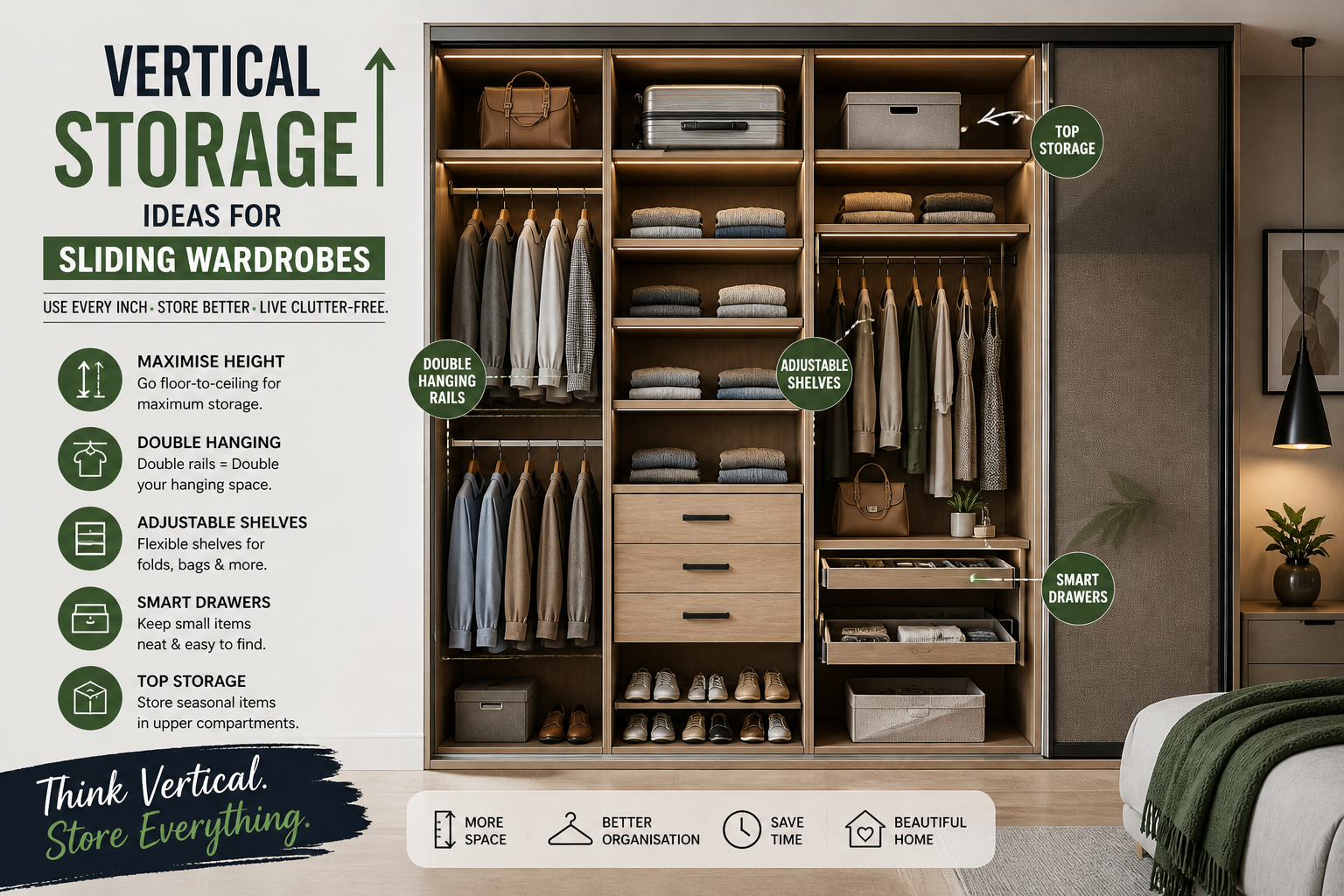
1. Use Floor-to-Ceiling Wardrobe Design
The first step to effective vertical storage is choosing a wardrobe that reaches the ceiling.
Floor-to-ceiling sliding wardrobes:
-
Eliminate wasted space above
-
Provide extra storage for seasonal items
-
Create a clean, built-in look
This design is becoming increasingly popular in UK homes because it combines style with practicality.
You can explore full-height options in the sliding door wardrobes collection , designed for maximum storage efficiency.
2. Add Top Storage Compartments
The upper section of your wardrobe is perfect for items you don’t use daily.
Ideal for:
-
Suitcases
-
Seasonal clothing
-
Extra bedding
Use storage boxes or baskets to keep things organised and easy to access when needed.
This ensures that even the highest part of your wardrobe is fully utilised.
3. Install Double Hanging Rails
One of the most effective ways to maximise vertical space is by using double hanging rails.
Instead of one long hanging section, divide it into two:
-
Top rail → shirts, jackets
-
Bottom rail → trousers, shorter garments
This instantly doubles your hanging capacity without increasing wardrobe size.
4. Adjustable Shelving for Flexibility
Adjustable shelves are essential for vertical storage. They allow you to customise the height of each section based on your needs.
Benefits:
-
Adaptable layout
-
Efficient use of space
-
Easy reorganisation
You can create smaller sections for folded clothes or larger spaces for bulky items.
5. Stackable Storage Solutions
Stackable boxes and organisers are a simple but powerful way to maximise vertical space.
Use them for:
-
Accessories
-
Shoes
-
Small items
They help keep your wardrobe tidy while making use of height that would otherwise go unused.
6. Vertical Shoe Storage
Shoes often take up unnecessary horizontal space. Vertical storage can solve this problem.
Options include:
-
Tall shoe racks
-
Pull-out vertical organisers
-
Slanted shelving
This keeps your shoes organised while freeing up space for other items.
7. Built-In Drawers with Vertical Planning
Drawers are important, but they should be integrated thoughtfully within your vertical layout.
Instead of placing drawers randomly:
-
Position them in the middle section
-
Use upper and lower space for shelving or hanging
This creates a balanced layout that maximises every level of the wardrobe.
8. Use Hooks and Hanging Accessories
Vertical storage isn’t just about shelves and rails. Accessories like hooks and organisers can make a big difference.
Use them for:
-
Bags
-
Belts
-
Scarves
These small additions help you utilise unused vertical areas effectively.
9. Lighting to Enhance Vertical Visibility
When using vertical storage, visibility becomes important—especially in taller wardrobes.
Adding LED lighting:
-
Improves accessibility
-
Highlights different sections
-
Makes the wardrobe feel more premium
Lighting works particularly well with reflective finishes.
To enhance brightness further, read our guide on How to Choose Wardrobe Finishes That Increase Bedroom Light.
10. Keep Frequently Used Items at Eye Level
Not all vertical space should be used equally. Prioritise accessibility.
Best practice:
-
Eye level → daily essentials
-
Lower section → shoes and heavy items
-
Upper section → rarely used items
This makes your wardrobe more practical and user-friendly.
11. Combine Vertical Storage with Minimalist Design
Too many compartments can make your wardrobe feel cluttered.
Instead:
-
Keep the layout simple
-
Use clean lines
-
Avoid overcrowding
A minimalist approach ensures your wardrobe remains functional and visually appealing.
If you prefer a clean look, explore our blog on Best Sliding Door Wardrobe Styles for Minimalist Bedrooms.
12. Plan for Future Needs
Your storage needs will change over time. A good vertical storage system should be flexible.
Consider:
-
Adjustable components
-
Extra compartments
-
Expandable sections
This ensures your wardrobe remains useful for years.
Common Mistakes to Avoid
Even with vertical storage, some mistakes can reduce efficiency:
-
Leaving top sections unused
-
Overloading shelves
-
Ignoring accessibility
-
Using fixed layouts with no flexibility
Avoiding these mistakes will help you get the most out of your wardrobe.
Final Thoughts
Vertical storage is one of the most effective ways to maximise the potential of your sliding wardrobe. By using floor-to-ceiling designs, double hanging rails, adjustable shelves, and smart organisation techniques, you can create a storage system that is both efficient and stylish.
For UK homeowners, where space is often limited, making the most of vertical space is essential. Sliding wardrobes provide the perfect foundation for this approach, offering flexibility, modern design, and long-term practicality.
At Sliding Door Wardrobe, the focus is on combining smart storage solutions with stylish designs that suit modern living.
If you want to improve your bedroom organisation without increasing space, vertical storage is the solution that makes a real difference.