
Cart
0
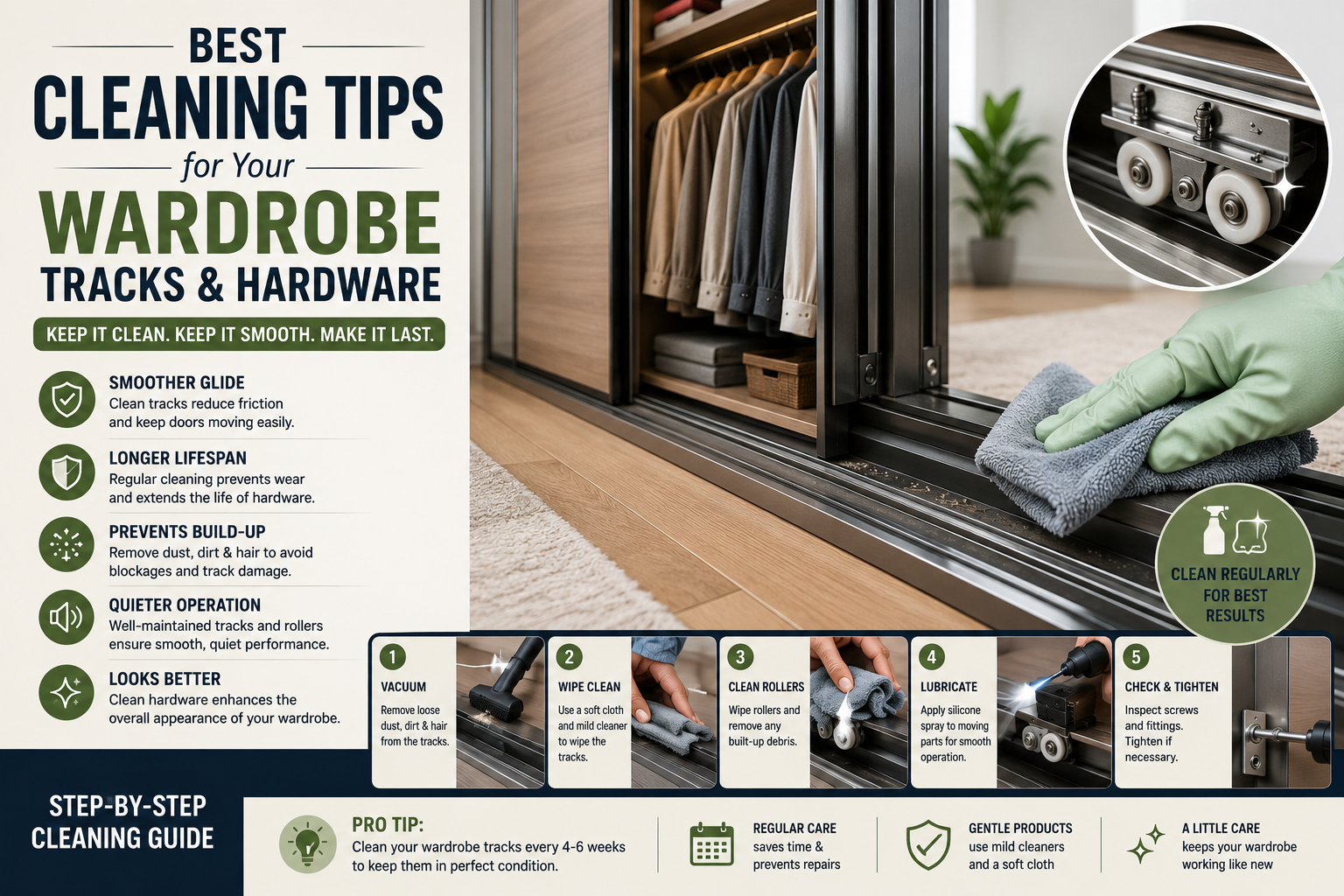
Sliding door wardrobes are a popular choice in modern UK homes because they combine style, functionality, and space-saving design. However, many homeowners focus on cleaning the wardrobe doors and interiors while overlooking one of the most important areas—the tracks and hardware.
Wardrobe tracks, rollers, and fittings work hard every day. Dust, dirt, pet hair, and debris can gradually build up, affecting performance and causing doors to stick, wobble, or become difficult to open. Regular cleaning and maintenance can prevent these issues while extending the lifespan of your wardrobe.
Whether you own a wardrobe from Sliding Door Wardrobe or are planning to upgrade your bedroom storage, these cleaning tips will help keep your wardrobe operating smoothly and looking its best.
Why Cleaning Wardrobe Tracks and Hardware Matters
Many wardrobe problems begin with poor maintenance. Even high-quality wardrobes can develop issues if dirt accumulates within the sliding mechanism.
Regular cleaning helps:
-
Improve door movement
-
Reduce wear on rollers
-
Prevent alignment problems
-
Extend hardware lifespan
-
Maintain a polished appearance
A few minutes of maintenance each month can save you from costly repairs later.
How Often Should You Clean Wardrobe Tracks?
The ideal cleaning frequency depends on how often the wardrobe is used.
For most UK households:
-
Light cleaning: Every 2–4 weeks
-
Deep cleaning: Every 3–6 months
Homes with pets or higher dust levels may require more frequent maintenance.
Consistent cleaning prevents dirt from becoming compacted inside the track system.
Step 1: Empty the Immediate Area
Before cleaning, clear any items near the wardrobe tracks.
This makes it easier to access the entire track system and reduces the risk of dirt being pushed further into the mechanism.
Move:
-
Shoes
-
Storage boxes
-
Clothing items
away from the base of the wardrobe.
Step 2: Vacuum the Tracks Thoroughly
Vacuuming is the most effective way to remove loose debris.
Wardrobe tracks often collect:
-
Dust
-
Hair
-
Fabric fibres
-
Small particles
Use a narrow nozzle attachment to reach corners and tight spaces.
Vacuuming removes debris without spreading it further into the track.
Step 3: Wipe Down the Tracks
After vacuuming, wipe the tracks using a soft microfibre cloth.
You can use:
-
Warm water
-
Mild soap solution
Avoid soaking the track with excessive water.
The goal is to remove any remaining dirt while protecting the hardware components.
Step 4: Clean Hard-to-Reach Areas
Some areas within the track system can be difficult to access.
Helpful tools include:
-
Soft brushes
-
Cotton buds
-
Small detailing brushes
These tools help remove dirt trapped in corners and around roller mechanisms.
Pay particular attention to areas where debris tends to collect.
Step 5: Inspect the Rollers
Once the tracks are clean, inspect the rollers.
Look for:
-
Dirt build-up
-
Cracks
-
Flat spots
-
Excessive wear
Dirty rollers can cause doors to drag or become misaligned.
If the rollers appear damaged, replacement may be necessary.
For homeowners experiencing alignment issues, our guide on How to Fix and Align Misaligned Sliding Wardrobe Doors provides practical troubleshooting advice.
Step 6: Lubricate Moving Parts
Lubrication is an important part of wardrobe maintenance.
However, using the wrong product can actually make the problem worse.
Recommended:
-
Silicone-based lubricant
Avoid:
-
Thick grease
-
Heavy oils
-
Multi-purpose lubricants that attract dust
Apply a small amount to the roller mechanism and moving parts.
This helps maintain smooth, quiet operation.
Step 7: Clean Door Frames and Handles
Wardrobe hardware includes more than just tracks and rollers.
Regularly clean:
-
Door frames
-
Handles
-
Edge trims
-
Metal fittings
Use a soft cloth and gentle cleaner suitable for the material.
Keeping hardware clean improves appearance and prevents corrosion.
Step 8: Remove Stubborn Dirt Safely
If dirt has hardened within the tracks, avoid using sharp tools.
Instead:
-
Soften debris with a damp cloth
-
Use a soft brush to loosen build-up
-
Wipe clean carefully
Sharp objects may damage the track surface and affect door performance.
Step 9: Check for Loose Hardware
While cleaning, inspect all visible fittings.
Look for:
-
Loose screws
-
Worn brackets
-
Unstable components
Tightening loose fittings can prevent larger issues from developing.
Routine inspections help maintain smooth operation.
Step 10: Protect Mirrored and Glass Doors
Many sliding wardrobes feature mirrored or glass panels.
When cleaning nearby hardware:
-
Avoid spraying cleaner directly onto mirrors
-
Apply cleaner to a cloth first
-
Prevent liquid from entering track mechanisms
This protects both the door surface and internal hardware.
If you're considering different wardrobe materials, our guide on How to Choose Wardrobe Materials for Durability and Style explains which finishes offer the best balance of appearance and longevity.
Common Cleaning Mistakes to Avoid
Even with good intentions, homeowners sometimes make mistakes that reduce wardrobe performance.
Avoid:
Using Excessive Water
Too much moisture can damage certain materials and encourage corrosion.
Ignoring the Upper Track
Many people only clean the bottom track.
Dust can also accumulate in the upper guide system.
Using Abrasive Cleaners
Harsh chemicals may damage finishes and hardware components.
Skipping Maintenance
Waiting until problems appear often results in more extensive repairs.
Preventative cleaning is always the better approach.
Signs Your Hardware Needs Attention
Cleaning helps identify potential issues before they become serious.
Watch for:
-
Grinding noises
-
Uneven door movement
-
Doors sticking
-
Excessive wobbling
-
Visible hardware wear
Addressing these signs early can prevent more expensive repairs.
Benefits of Regular Maintenance
Homeowners who clean wardrobe tracks and hardware regularly enjoy several advantages:
Improved Functionality
Doors glide more smoothly and operate with less effort.
Longer Lifespan
Clean hardware experiences less wear and tear.
Better Appearance
A clean wardrobe contributes to a tidy, polished bedroom.
Reduced Repair Costs
Routine maintenance helps avoid unnecessary replacements.
Choosing a Quality Wardrobe Makes Maintenance Easier
The quality of your wardrobe hardware plays a major role in long-term performance.
When exploring the sliding door wardrobes collection, consider:
-
Roller quality
-
Track durability
-
Frame construction
-
Ease of maintenance
Higher-quality components generally require less maintenance and provide smoother operation over time.
Final Thoughts
Cleaning your wardrobe tracks and hardware may seem like a small task, but it has a significant impact on performance, appearance, and longevity. By vacuuming tracks, inspecting rollers, lubricating moving parts, and checking fittings regularly, you can keep your sliding wardrobe functioning smoothly for years.
For UK homeowners, preventative maintenance is one of the simplest ways to protect their investment and avoid common wardrobe problems.
At Sliding Door Wardrobe, quality wardrobes are designed to provide stylish storage and reliable performance. Combined with regular cleaning and care, they can remain a practical and attractive feature in your bedroom for many years to come.