
Cart
0
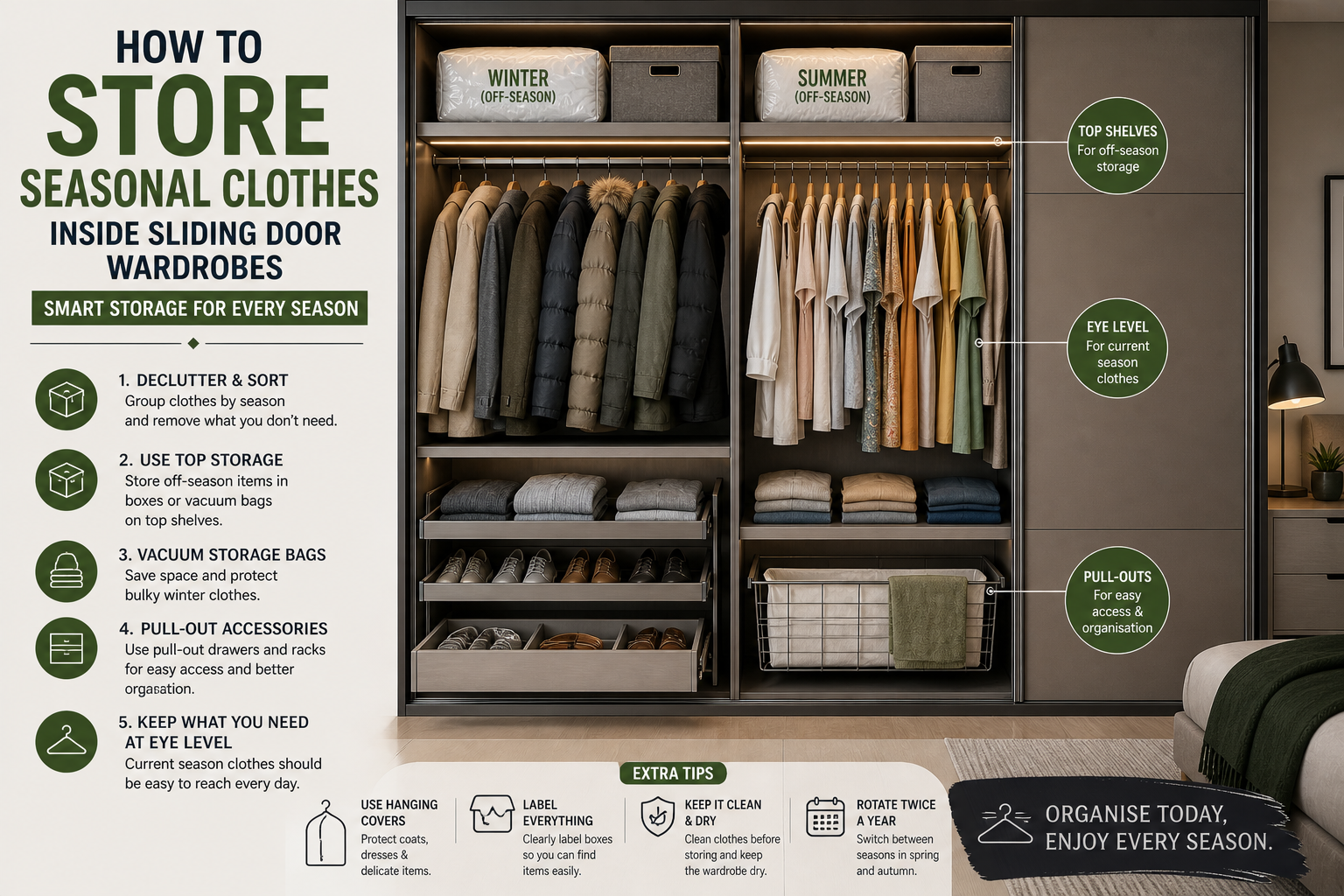
Managing seasonal clothing can be a challenge for many UK homeowners, especially when wardrobe space is limited. Winter coats, summer outfits, bulky jumpers, and occasional wear often compete for the same space, leading to clutter and disorganisation.
Sliding wardrobes offer a smart solution, but the real key lies in how you organise the interior. With the right strategy, you can store seasonal clothes efficiently while keeping your everyday essentials easily accessible.
If you’re exploring storage solutions from Sliding Door Wardrobe, this guide will help you organise seasonal clothing like a pro.
Why Seasonal Storage Matters
Keeping all your clothes in one place without organisation can quickly create chaos.
Common issues include:
-
Overcrowded wardrobe space
-
Difficulty finding daily outfits
-
Wrinkled or damaged clothing
-
Wasted storage areas
Seasonal storage helps you rotate items based on usage, ensuring your wardrobe remains clean and functional throughout the year.
Step 1: Declutter Before You Store
Before organising seasonal clothes, start by decluttering.
Ask yourself:
-
Have I worn this in the past year?
-
Does it still fit?
-
Is it in good condition?
Remove items you no longer need. This creates more space and makes organisation easier.
Step 2: Divide Clothes by Season
Separate your wardrobe into seasonal categories:
-
Winter (coats, jackets, knitwear)
-
Summer (light clothing, dresses, shorts)
-
Transitional (spring/autumn wear)
This makes it easier to rotate items when the weather changes.
Step 3: Use Top Sections for Off-Season Items
One of the best ways to maximise space is by using the upper sections of your wardrobe.
Ideal for:
-
Off-season clothing
-
Bulky items
-
Occasional wear
Store these items in boxes or containers to keep them protected and organised.
Sliding wardrobes are perfect for this because they often extend to ceiling height.
You can explore full-height designs in the sliding door wardrobes collection, built for efficient storage.
Step 4: Use Vacuum Storage Bags
Bulky winter clothing like coats and jumpers can take up a lot of space.
Vacuum storage bags:
-
Reduce volume significantly
-
Protect clothes from dust
-
Save valuable space
They are especially useful for storing items during off-seasons.
Step 5: Invest in Storage Boxes and Baskets
Storage boxes help keep seasonal clothes organised and easy to access.
Best practices:
-
Label each box clearly
-
Use transparent containers for visibility
-
Stack them neatly
This ensures you can find what you need without unpacking everything.
Step 6: Rotate Clothes Twice a Year
Seasonal storage works best when you rotate your wardrobe regularly.
Typical rotation times:
-
Spring → store winter items
-
Autumn → store summer clothes
This keeps your wardrobe relevant to the current season and avoids overcrowding.
Step 7: Protect Clothes Properly
Proper storage is essential to maintain the quality of your clothing.
Tips:
-
Clean clothes before storing
-
Use breathable covers
-
Avoid damp areas
This prevents damage, odours, and wear over time.
Step 8: Use Pull-Out Accessories
Pull-out drawers and shelves make it easier to access stored items.
Benefits:
-
Better visibility
-
Easy organisation
-
Efficient use of space
If you want to explore smart storage solutions, read our guide on Best Pull-Out Accessories for Wardrobe Interiors .
Step 9: Maximise Vertical Space
Vertical storage is key when dealing with seasonal clothing.
Use:
-
Adjustable shelves
-
Stackable storage boxes
-
Double hanging rails
This helps you utilise every inch of your wardrobe effectively.
For more ideas, check our article on Vertical Storage Ideas for Sliding Wardrobes.
Step 10: Keep Everyday Items Accessible
While storing seasonal clothes, make sure your daily essentials remain easy to reach.
Best approach:
-
Eye level → current season clothing
-
Lower section → shoes and heavy items
-
Upper section → off-season storage
This creates a balanced and practical layout.
Step 11: Use Hanging Covers for Delicate Items
Some seasonal clothing items, like coats or dresses, should be stored hanging.
Use:
-
Garment bags
-
Protective covers
This keeps them wrinkle-free and ready to use when needed.
Step 12: Add Lighting for Better Visibility
When storing items in upper sections, visibility can become an issue.
Adding LED lighting:
-
Improves access
-
Makes organisation easier
-
Enhances the overall look
Lighting is especially useful in deeper wardrobes.
Step 13: Keep It Simple and Organised
Overcomplicating your storage system can make it harder to maintain.
Follow these tips:
-
Avoid overloading shelves
-
Keep similar items together
-
Maintain a clean layout
A simple system is easier to manage long-term.
Common Mistakes to Avoid
When storing seasonal clothes, avoid these common errors:
-
Mixing all seasons together
-
Not cleaning clothes before storage
-
Ignoring vertical space
-
Overcrowding the wardrobe
Avoiding these mistakes ensures your wardrobe stays functional year-round.
Final Thoughts
Storing seasonal clothes properly can transform your wardrobe into a highly efficient and organised space. With the right techniques—such as using top sections, vacuum bags, storage boxes, and pull-out accessories—you can maximise space without compromising accessibility.
Sliding wardrobes provide the perfect foundation for seasonal storage, offering flexibility, modern design, and efficient use of space.
At Sliding Door Wardrobe, the focus is on helping UK homeowners create practical and stylish storage solutions that adapt to their needs throughout the year.
By following these strategies, you can keep your wardrobe organised, protect your clothes, and enjoy a clutter-free bedroom all year round.